Rules that hold up
House-rule drift kills trust. The interesting work is an authoritative ruleset people already know — or a new one that stays consistent.
Production-ready multiplayer and mobile game development — clocks, matchmaking, and a live table players can trust.
mobile game development
Mobile Game Development
Multiplayer sessions & clocks
App Store & Play launch
Authoritative game logic
Ranks, economy, updates
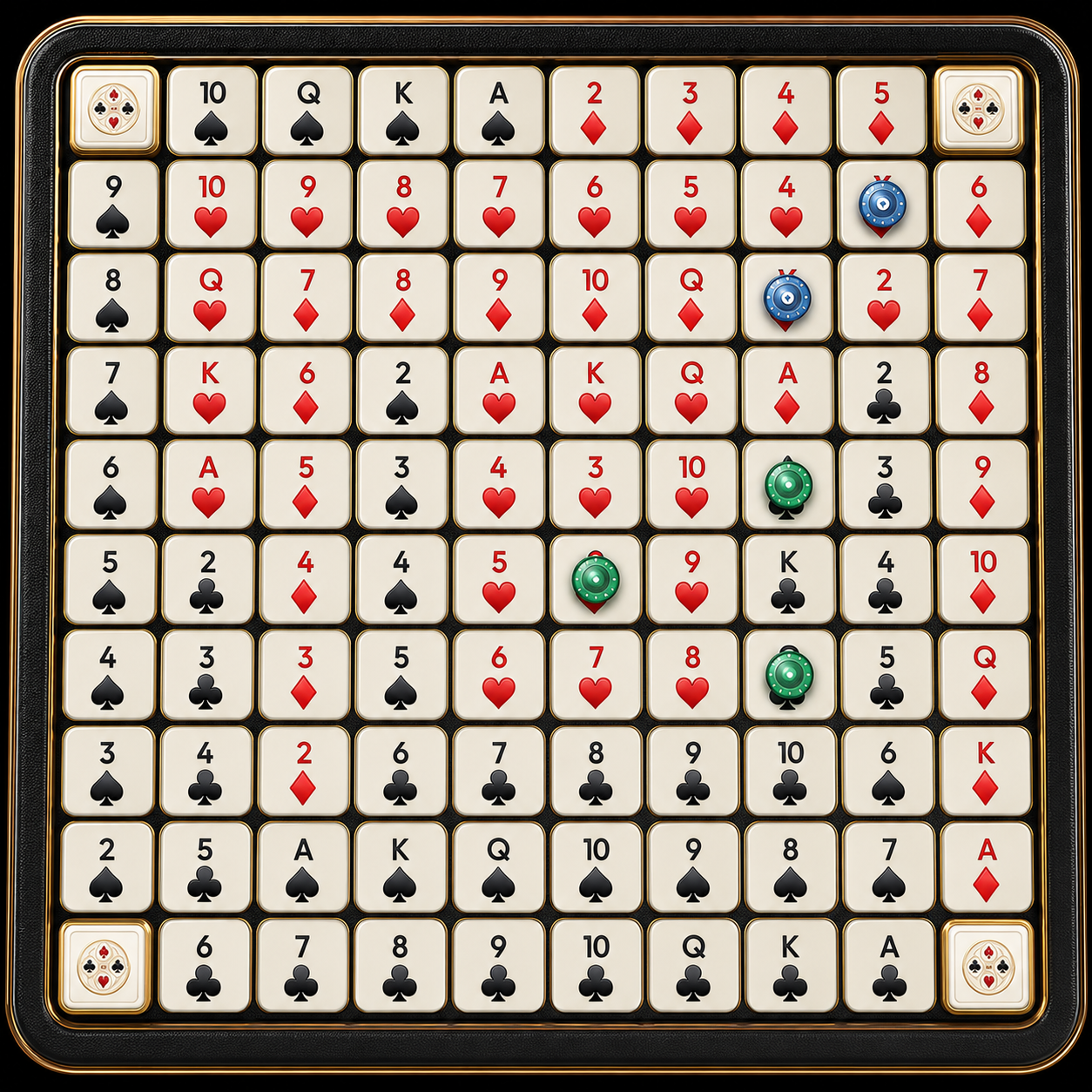
The4Loop builds mobile games as products, not pitch decks. Sequence Rivals is the public proof: a Sequence-style table with official-style rules, a 30-second clock, public matchmaking, and bot practice. We treat rules fidelity, live sessions, and store launch as the work — not a reskin of a generic card template. Runtime and cloud are confirmed in discovery; we do not keyword-stuff a framework we have not locked.
Engagement
Figures describe typical ranges for this practice. Scope and numbers lock in discovery — not in the brochure.
Get a scoped quoteA mobile game is not a marketing site with extra animation. Players judge it on whether turns resolve, matches stay fair, and the table still feels like the game they came for.
House-rule drift kills trust. The interesting work is an authoritative ruleset people already know — or a new one that stays consistent.
Clocks, auto-play, and reconnect considerations exist because someone always walks away mid-match.
Tutorial and practice before a live queue. First-time players should not be thrown into a public match cold.
The major lane. Public queues, shared boards, and timers are product decisions — implementation details stay in architecture, not in slogans.
Who sits across from whom, how long they wait, and what happens when a seat does not fill.
A shared clock and legal-move set. Disconnects and late joins are named as engineering considerations, not as magic.
Auto-play on timeout, dead-card handling, and a board both players can see.
Coins, rewarded ads, and in-match purchases can exist without rewriting the rules. We treat economy as product design, not a bolt-on SDK.
Daily free matches with extras via coins or ads — so the economy is a path, not a wall.
Purchases that do not change how a sequence or a round is scored, unless that is an explicit design choice.
Ranks, leaderboards, friends, streaks, and cosmetics give a reason to return after the first win.
Global and country boards, ranks, and a public match that means something.
Card backs, frames, and board themes so the table looks like theirs.
Friends and streaks when the product is ready for them — not a fake community widget.
Rules, board or arena, and the loop a player repeats — not a vertical slice that dies in a pitch deck.
Queues, seats, reconnect considerations, and a clock that keeps a match moving.
Tutorial, bots, or guided play so the first live match is not the first time someone learns the rules.
Ranks, leaderboards, and identity items that give a reason to come back — without rewriting the rules.
Coins, ads, or in-match purchases when the product needs them. Designed as product, not a surprise SDK dump.
Listings, review notes, and a release checklist for App Store and Play Store.
Players, platform, genre, and what “done” means. If a prototype is enough, we will say so.
Rules, win conditions, session length, and the loop — written so engineering can implement them without house-rule drift.
Board, HUD, and menus that stay readable under a timer, on a phone, with one thumb.
Client, session, and rules ownership. Key engineering considerations are named before a stack is locked.
The playable table or arena. Features ship against the rules doc, not against a mood board.
Matchmaking, clocks, disconnects, and the shared state a competitive match cannot fake.
Rules edge cases, timer fairness, and device coverage — the boring work that keeps ranked play honest.
A closed group on real hardware before the stores see it.
Submission, age ratings, and the wait built into the plan.
Patches, events, economy tuning, and the first season after launch — not a hand-wave at “community.”
Capabilities — runtime confirmed in discovery
Tools are chosen for the job — not for a logo wall. If a simpler stack is enough, we will say so.
The same senior team from brief through launch — on this practice and the ones around it.
“The4Loop behave like an embedded product team, not an agency on the sidelines — strategy, design, and engineering in one thread.”
CEO
“We needed craft and serious engineering in one partner. They shipped a web experience and a mobile suite that finally matched the ambition of the product.”
Founder
“Their AI practice is unusually pragmatic — clear guardrails, thoughtful UX for model outputs, and documentation a compliance team can actually use.”
CTO
Scope, timeline, and how the work actually runs — before you book a call.
Related, not identical. Custom mobile apps covers product software — remittance, field tools, consumer utilities. Mobile game development is for rules, sessions, matchmaking, and live ops.
Custom iOS and Android apps built around your product — not a template — from prototype to App Store and Play Store.
View serviceNative-quality iOS and Android experiences — from first flow to store release — with release discipline and store-ready polish.
View serviceCustom web application development on modern stacks — dashboards, portals, and internal tools shaped around how you actually work.
View serviceShare the rules, the platform, and how competitive it needs to be. We will tell you honestly whether we are the right studio.